Ziarul Financiar, ZF Live 2018: a US acquisition, bank platforms and the market
Topics: Tremend, 2005–2022
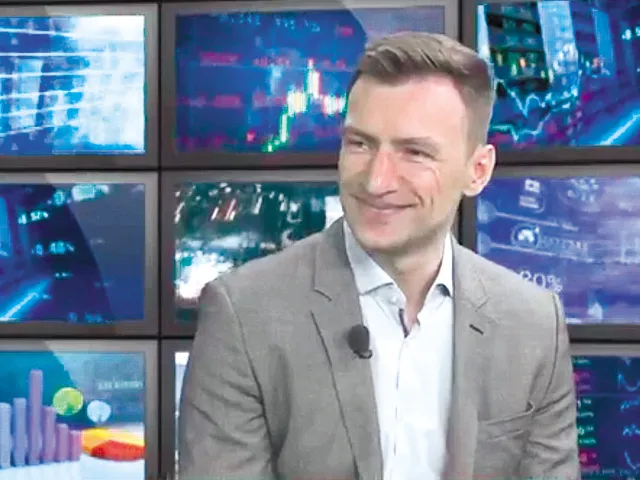
Watch the episode on Ziarul Financiar ↗VIDEO ZF Live. Marius Hanganu, Tremend Software Consulting: Ne aflăm pe ultima sută de metri pentru achiziţia unei companii din SUA
ZF Live video interview, January 2018, three weeks before Tremend announced the purchase of the US company 648 Group. I was then co-founder and managing partner of Tremend. Topics: the acquisition in progress, what Tremend was building, digital platforms for banks and telecoms, why Romania did not yet build more products, relevance in the region.
Lead of the written article, by Cristina Bellu: Tremend, in Deloitte’s ranking of the 50 most dynamic technology companies in Central Europe for the second year in a row, was close to completing the acquisition of a US company that would mark its entry on the American market, after ending 2017 with revenue of over EUR 5.5 million.
A smaller US company, for clients and a presence there
“It helps us with the presence there. They do somewhat similar things to us, and that helped with the integration.” („Ne ajută pentru prezența acolo. Ei fac oarecum lucruri similare cu noi și asta a ajutat la integrare.”) (at 23:25)
Tremend was in the process of finalising a deal for a smaller organisation in the US (at 21:41). The reasons: personal and business ones, consolidation among them, “pentru clienți, pentru o prezență mai bună în state” (“for clients, for a better presence in the States”, at 22:02). The company belonged to a Romanian settled there, Val Bălănescu (at 22:17). On the price and the financing: I did not know if I could talk yet about how they would finalise the deal (at 22:40).
Elsewhere. StartupCafe, 2018, three weeks later, once the deal was announced: “with the local presence this acquisition secures, we set out to grow the number and the complexity of our projects on this market.” („odată cu prezenţa locala asigurată prin această achiziţie, ne-am propus să creştem numărul şi gradul de complexitate al proiectelor pe această piaţă”)
What Tremend was building in 2018
“We actually build solutions. In digital transformation, we have an advanced engineering division, where we work with automotive and the car industry, with companies active there, and a research area where we try to discover how we can apply the latest innovations to the benefit of clients.” („Chiar construim soluții. În zona de digital transformation, avem o divizie de advanced engineering, în care lucrăm cu automotive și industria de automobile, cu companii care activează acolo, și o zonă de research în care încercăm să descoperim și noi cum putem aplica ultimele inovații în beneficiul clienților.”) (at 2:20)
Tremend: a little over 200 people at the end of 2017, after starting the year with 100-something, and revenue of a little over EUR 5.5 million (at 2:51). A pipeline of work allowed that growth (at 3:32). About half of the revenue came from Romania and half from abroad (at 9:44). Expected for 2018: more than 8 million (at 24:14).
Platforms for banks and telecoms
“Generally, a piece of software, if it is at all important for the organisation, exists as long as the organisation exists.” („În general, un software, dacă este cât de cât important pentru organizație, există cât există și organizația.”) (at 8:20)
Tremend’s clients were in banking and telecom, and its speciality was digital platforms. A bank or a telecom wants to expose improved services to its customers, or an improved interface to its internal systems, and with decades of products and great complexity behind them that becomes very hard (at 5:42). Example: Bazar, a card-linked loyalty product Tremend built for ING and integrated with its online banking, which gives customers discounts on their card based on the bank’s agreements with merchants (at 6:44). A first version takes a few months, three or four, and after that the software has to be upgraded continuously (at 7:55 and 8:45). The time of one-year contracts was mostly over: plans now aimed to reach the market sooner, in three to six months (at 9:10).
The market, not the minds
“From my point of view, the main thing is the market.” („Din punctul meu de vedere, principalul este piața.”) (at 13:17)
Why Romania built so few products of its own: the economic power of the market, 20 million people against 300 million, who spend more (at 13:23). In terms of minds, “suntem clar acolo” (“we are clearly there”), and the rest was “doar o chestie de timp” (“just a matter of time”, at 13:46). I was very confident Romania would get there, with enough brains in IT and much talk about innovation. What was needed: better help in learning how to sell to bigger markets, so that someone with a product idea here has the means to sell it there (at 14:27).
Elsewhere. Sramana Mitra, 2018, the same month: “We’ve been asking ourselves the product question all along our history. Our main problem is sales and marketing.”
Products beside services, and relevance in the region
“Personally, I really hope we will be relevant at the level of the region, at least.” („Personal chiar sper să fim relevanți la nivel de regiune, măcar.”) (at 25:12)
On whether Tremend could grow ten times: it is hard to scale from services alone, a combination is needed, and creating products in parallel with services is a very good idea (at 20:01). EPAM is a services company from the region with much larger numbers; it would be nice to have an alternative to it here (at 20:58). Romania had many fantastic organisations, but none comparable to those examples, and I was glad Romania would soon, I hoped, have its first unicorn and be on the map (at 25:17).
Elsewhere. Economica.net, 2022: I would like to see more unicorn companies in Romania.
Watch the episode on Ziarul Financiar ↗
A summary of an external interview or article. Quotes are my words as published or spoken; the original is the reference.